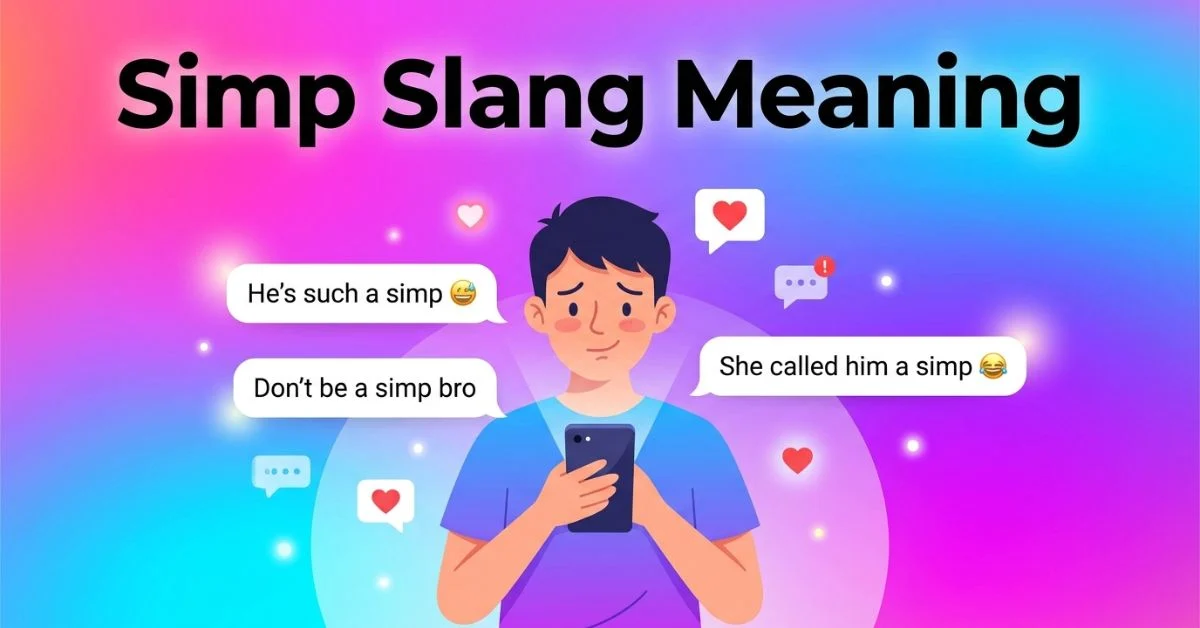
If you’ve spent any time on social media, gaming chats, or comment sections, you’ve probably come across the term simp.
Naturally, many people search for simp slang meaning to understand whether it’s an insult, a joke, or something else entirely.
The confusion comes from how widely the word is used—and how its tone can change depending on context.
Originally used as a casual insult, simp has evolved into a popular internet slang term that can be playful, sarcastic, or even self-deprecating.
Some people use it jokingly among friends, while others use it to criticize certain behaviors, especially in dating or online interactions.
Understanding the meaning behind simp helps you avoid misunderstandings and use the term appropriately in conversations.
Meaning & Definition
The simp slang meaning generally refers to someone—usually a man—who shows excessive attention, affection, or admiration toward someone (often a romantic interest), especially when it is not reciprocated.
In simple terms, a simp is:
- Someone who tries too hard to impress someone they like
- A person who prioritizes another person over their own self-respect
- Someone who seeks validation or attention in an unbalanced way
Example:
- “He bought her expensive gifts, and she barely talks to him—he’s simping hard.”
However, the tone can vary:
- Negative use: Suggests lack of self-respect
- Neutral/joking use: Friends teasing each other
- Self-use: People calling themselves a simp humorously
Background
The word simp actually existed long before the internet made it popular. It comes from the word “simpleton,” which historically meant someone who is naive or foolish.
In the early 2000s, simp started appearing in hip-hop culture, often used to describe someone overly submissive in relationships.
Over time, platforms like Twitch, Reddit, and TikTok helped the term explode in popularity.
Around 2019–2020, simp became a viral internet slang term, especially in meme culture.
It was often used in streaming communities where viewers would donate money or give attention to influencers, leading others to label them as “simps.”
Today, the simp slang meaning has broadened and softened in many cases. It’s no longer always harsh—it can even be playful or ironic depending on the situation.
Usage in Different Contexts (Chat, Social Media, Professional Fields)
Casual Chat
In everyday texting, simp is mostly used jokingly:
- “Bro, you replied instantly… simp behavior.”
Social Media
On platforms like Twitter, TikTok, and Instagram:
- Used in memes and comments
- Often playful or exaggerated
- Sometimes used to criticize attention-seeking behavior
Gaming & Streaming
In gaming communities:
- Refers to viewers overly supporting streamers
- Often used humorously but can be mocking
Professional Fields
In professional settings, the term is not appropriate. It can come across as disrespectful or unprofessional, so it’s best avoided in workplace communication.
Meaning in Chat, WhatsApp, Instagram, TikTok
The simp slang meaning slightly shifts depending on the platform:
- WhatsApp: Friendly teasing among friends
- Instagram: Comments under posts, often joking
- TikTok: Meme culture, exaggerated scenarios
- Snapchat: Casual, playful usage
Examples:
- “You liked all her posts? Simp 😂”
- “I’m a simp for good food, not gonna lie.”
Here, the meaning can even extend beyond relationships to show strong admiration for anything.
Meaning in Physics, Medical, and Aircraft Terminology
Interestingly, simp also appears outside slang in technical fields:
- Physics: No standard meaning
- Medical: Not a recognized medical term
- Aircraft: Sometimes used as shorthand (e.g., “simple system”), but not formal
So, in most cases, if you see simp, it’s almost certainly slang—not a technical term.
Common Misconceptions
There are several misunderstandings about the simp slang meaning:
- ❌ It always insults someone → Not true; often used jokingly
- ❌ It only applies to men → While commonly used for men, it can apply to anyone
- ❌ It means being kind → Being kind ≠ being a simp
The key difference is balance—kindness is healthy, but simping suggests overdoing it without respect for oneself.
Similar Terms & Alternatives
Some related slang terms include:
- “White knight” – Defending someone excessively, often online
- “Thirsty” – Seeking attention or validation
- “Down bad” – Desperate for someone’s attention
- “Fanboy/Fangirl” – Strong admiration, usually harmless
Each has slightly different meanings but overlaps with simp in certain contexts.
How to Respond to It
If someone calls you a simp, your response depends on tone:
- Joking tone:
- “Yeah, proudly 😎”
- Playful defense:
- “It’s called appreciation, not simping.”
- Serious situation:
- Clarify or ignore if unnecessary
The best response is often to match the tone of the conversation.
Differences from Similar Words
While similar terms exist, simp stands out because:
- It focuses on romantic or admiration-based behavior
- It implies lack of balance or self-respect
- It’s often used ironically or humorously today
Unlike “fan” or “admirer,” simp carries a slightly negative or teasing tone.
Relevance in Online Conversations & Dating Apps
The simp slang meaning is especially relevant in modern online interactions:
Dating Apps
- Used to describe people who try too hard
- Sometimes used unfairly to mock genuine interest
Online Conversations
- Common in memes and comment sections
- Reflects modern dating culture and humor
However, overusing the term can discourage genuine kindness, so context matters.
Conclusion
The simp slang meaning has evolved from a harsh insult to a widely used internet term with flexible meanings.
Today, it can be playful, sarcastic, or mildly critical depending on how it’s used. While it often refers to someone showing excessive attention or admiration, it’s important to understand the context before reacting.
In modern digital culture, simp reflects changing attitudes toward relationships, attention, and online behavior.
Used correctly, it can be humorous and harmless—but misused, it can come across as judgmental. Like most slang, the key is balance, awareness, and tone.